
Education

Recently a friend of mine shared an article on social media written by a well meaning Indian journalist about the Indian prime minister Narendra Modi, as to how the lack of having superior educational credentials, makes him unfit for the job he is doing currently as the prime minister of India. Written by a known Modi-baiter, the article was eye-opening in not failing to subtly hint that the prime minister (who has achieved his credentials through distance learning courses following working as a tea seller his whole life) should lie low and allow the ‘educated’ technocrats to do the work. After reading the article, I kept thinking as to whether education was after all the only credential one needs in order to have a successful life.

On one hand we have educated people of the likes of people like Barack Obama, Bill Clinton, Satya Nadella who became successful in life having a superior education, we also do have people like Steve Jobs, Bill Gates, Mark Zuckerberg who dropped out of school in their quest to change the world we live in. Never once did any of them mention that education helped them achieve the superior success that they so proudly enjoy to this date. They felt in them the ‘sense of urgency’ and the ‘never say never’ spirit to make profound decisions that has left an inedible mark on the human race.

If so why does one ever need to get educated? Kerala, my state in India boasts of near 100% literacy. In unemployment it is the first in the country with very low productivity rates. Constantly plagued by never-ending political protests and work strikes, around 10% of the people from the state leave the place for greener pastures around the world often ending up being extremely successful. There is a question hanging in reader’s head- if the state has such high education numbers, why does these things happen? Has education failed to be a key performance indicator for the progress of the state?

I do not think so. I believe the present modern education system is in a dire need of a technological disruption. With efforts by Google, Microsoft and Apple, the modern modes of education are being challenged which will have a direct impact in developing skills rather than mere assimilation of knowledge. The education that I was exposed to was of the latter variety. Certain life skills in my opinion need to be developed at an elementary level. This can only happen with a complete overhaul of the education system that in my opinion is inevitable.

Why I stress on the importance of skills is the fact that the road to success is not paved by having or lack of education- but by being focused and working hard. Satya Nadella the current CEO of Microsoft has two Masters degrees and worked painstakingly for 22 years before becoming the CEO of Microsoft. He is credited with the turnaround of the fortunes in the short time he was the CEO with shares rising to 16% since he took over. Barack Obama spent 11 years both as Illinois State and US senator moving bills, writing books, speeches etc., before he became the president of United States. Narendra Modi spent 13 years as a successful chief minister of one of India’s populous state before he offered his model of development to Indians who bought into it by electing him. Even today he works anywhere between 15-20 hours per day and travels extensively around the world as he tries to secure India’s future. Steve Jobs thrown out from his own company, spent years building PIXAR and Next Computer before taking the cues from these places to return to Apple, rescue the floundering company and take it to its greatness that we see today. His hard work in those companies evolved into his efforts at Mac, iPad, iPhone and the iPad. Mark Zuckerberg spent hours coding to build Facebook and he works tirelessly even today to develop and consistently improve the social network. Bill Gates’ family lived near the University of Washington which enabled a teenager Gates to feed his programming addiction by sneaking out of his parents’ home after bedtime to work on the University’s computer. From 1968 to 1975 he and Paul Allen ensured that they got their feet wet thoroughly prior to launching Microsoft. I strongly believe that nothing life works like hard work.

However mere hard work doesn’t cut it. One needs to have intent and the belief that he/she could do something to change something…even change the world. As Steve Jobs once said “The people who are crazy enough to think they can change the world are the ones who do”. Without these, will just being educated end up making you someone/ something noteworthy? It is the same as saying that just because your parents are doctors, you will be healthy and live one hundred years. Just because you are educated doesn’t give you the ticket to greatness. It helps but doesn’t provide.

Image courtesy: https://www.flickr.com/photos/horiavarlan/4268897748

All images follow Creative Commons license

Intuition

a natural ability or power that makes it possible to know something without any proof or evidence : a feeling that guides a person to act a certain way without fully understanding why…Merriam Webster

Have you ever felt the inner voice that tries to talk to you before you undertake a significant task in life? It tries to explain to you whatever you are doing is right or wrong; how you should/shouldn’t be taking that step. It tries to prevent you, sometimes even instigates you to do something. It gives you a spark of an idea to start a fire within you. It tries to possess you and wouldn’t even leave you till you do what it demands of you. It can be stubborn and it can be patient yet forgiving. However most of the time, you wouldn’t forgive yourself for not listening to its voice. The ancient people believed in the intuitive insights from the seers whom they referred to as the voice from god. Buddha taught that intuition, not reason is the source of ultimate truth and wisdom. Alberta Einstein was a strong believer in the intuitive knowledge and once famously remarked: ‘I believe in intuitions and inspirations…I sometimes feel that I am right. I do not know that I am’.

Frederich August Kekule spent years trying to perfectly describe the aromatic structure of benzene. Being a hydrocarbon, benzene couldn’t be described a simple or normal paraffin structure. He spent years if not decades of his life researching unsuccessfully about the same till there came a day when he dreamt of a snake gobbling its own tail. As the ouroboros form (also represented in the figurines of Shiva Nataraja) whirled mockingly before his eyes, he describes the eureka moment as a flash of lightning which awoke him in the night. Bedazzled he spent the rest of his night working on his life’s worth of calculations. Eventually he came up with the ring structure of benzene that is so common today. It changed the world forever with a marked effect in the field of pure and applied chemistry. Of the first 5 Nobel Prizes in Chemistry, three of the winners were his students. I do not have to explain the effect it had on the hydrocarbon age and us understanding the properties of hydrocarbons.

Let us think for a moment as to who gave Kekule that idea or intuition? What made him dream about that snake? Is it the voice of God? Is it the spirits of the world as claimed by Aboriginals or natives? The whole premise about the movie Interstellar is based on how the future humans build the tesseract for Cooper to reach out to his daughter. Any ordinary viewer of that movie would try to shrug off the strange happenings in the library that the young girl witnesses in the beginning of the movie as cinematic liberties being used to tell a story. The same viewer would be dumbfounded in the end when it turns out that it was her father who was trying to communicate with her supposedly from the future in the tesseract about the impending doom to humanity. The concept explained in the movie is Vedic in nature wherein it is mentioned that all human life is connected like the Indra’s net and there is a universal consciousness which transcends time and space.

The very concept of human understanding being directed by our future-self or even of our descendants is something very astounding. Even in the Bible there is a mention of this concept where Jesus claims to the people that Father Abraham knew about him and was glad about him. Was he the one that spoke to Abraham just as he was about to sacrifice his son Isaac? This concept bewildered the poor Israelites and could be one of the significant reasons to why they crucified him because it was blasphemous. Anything that went against their realm of understanding and/or if not was written in the religious texts was considered blasphemous at that time. A similar tale is also mentioned in the Isra and Miraj journeys by Prophet Muhammad. Did it influence the benevolence shown to the Ishmaelites by the Jews back in the Biblical times? We may never know.

Our bodies are composed predominantly of carbon. Many of the elements that comprise the cosmic matter can be found in our own bodies. Our existence on this earth is also guided by the same cosmic rules like gravity that guide the stars, planets , etc. If we think that we are matter, so we are also energy. Frances E. Vaughan in Awakening Intuition describes the vibrations of energy or vibes that extrude from people as a form of emotional intuition. It is believed in Hinduism that meditation and a disciplined control of mind provides intuitive insights and one of the main aims of Yoga is to develop that intuition. Our intuitive feelings can be strengthened if we know what we need to do in life. Just like we love to learn from the mistakes of the past, we should be able to see our future and try to develop our present through our intuition.

Intuition (is) perception via the unconscious. The unconscious is not just evil by nature, it is also the source of the highest good: not only dark but also light, not only bestial, semihuman, and demonic but superhuman, spiritual, and, in the classical sense of the word, “divine.” Carl Jung (1875-1961)

Image courtesy: https://www.flickr.com/photos/smoovey/4972074406/

All images follow Creative Commons license

Natural Selection

“I have called this principle, by which each slight variation, if useful is preserved, by the term of natural selection”. Charles Darwin

Natural selection is one of the most beautiful, yet simplest concepts in science and is the cornerstone of our understanding of the human evolution. It was explained by Darwin as the gradual process by which your heritable behaviours are altered by inherited behaviours due to the influence of your environment that if you survive, shall cause you to evolve. For example domesticated animals like dogs were descended from wolves captured by early men hunters and domesticated as much as 135000 years ago.

Natural selection as explained by Darwin takes a long time to materialize. Yet it has been found by epigenetics that certain inherited behaviours can occur as quickly as within the next generation. Few years ago a research team in the University of Linköping created a henhouse where a group of chickens had to live in stressful conditions. Lighting was manipulated to make rhythms of day and night unpredictable. This caused the chickens to lose track of when to eat or roost. As a consequence it was noticed that there was significant decrease in the ability of these chickens to search for food in a maze.

The chickens were then later moved to a different henhouse with natural conditions (and less stressful conditions). It was noticed that their offspring also had a similar decreased learning ability to search for food. The inherited behaviours  during the time the parents were stressed out in the earlier environment stuck on to them at a genetic level, which was subsequently passed on to the children.

In the book The Power of Habit: Why We Do What We do in Life and Business, Charles Duhigg vividly explains the story of the amazing turnaround of Aluminium Company of America-or Alcoa. In 1987, Alcoa was deep in red with mounting losses from a spate of unprofitable new businesses. Alcoa was one of the word’s largest companies with a new CEO, Paul O’Neill, a former bureaucrat and a surprise choice for the position. At 51 years, Paul stood in a ballroom stage facing panicky investors who wanted to hear new promises of cost cutting, raising profits etc. Instead Paul talked about safety and how he intends to turnaround Alcoa’s pathetic safety record and thereby make it the safest company in America. The confused investors tried to bombard the new executive with complex financial questions. Paul ignored them and mentioned that if we bring our injury rates down, it will be because the employees of Alcoa have agreed to become part of something important.

Following this presentation there was a literal massacre of Alcoa’s shares as the investors started selling heavily. Little did they know that what they did would be one of the worst financial decisions they ever made in their entire careers. Some estimates put it like this- anyone who invested a million dollars in Alcoa on the day O’Neill was hired would have earned another million dollars in dividends while he headed the company for 13 years-and would have seen the value of their stock be five times bigger when he left.

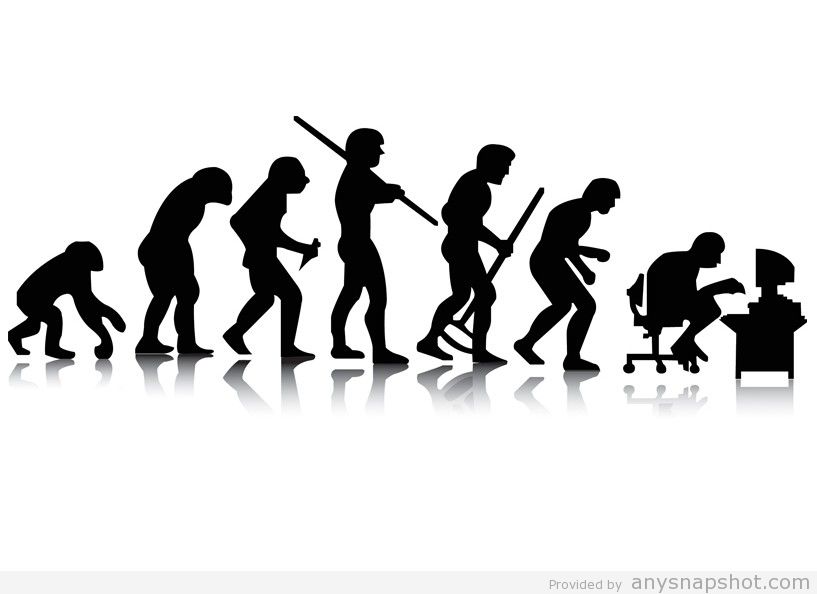
Darwin explained the mechanism of natural selection as the “survival of the fittest” where evolution of the organism in its environment is directly proportional to its struggle there. In both the examples mentioned here one can see how an inherited behaviour can result in either a positive or negative impact to an organism or even an organization. In the case of chickens, the stress filled environment resulted in a fight for survival-where certain negative behaviours  were developed and it subsequently made its way to its offspring. Paul had a company that killed people due to its poor safety record and lost money heavily. He had to change the environment of Alcoa by introducing a culture that focused on safety. It forced the company to change itself and thereby fight for its own survival within its newly changed environment. This fight percolated to a genetic level of the company allowing it to accelerate itself to huge economic success.

The key message here is that one needs to be intentional about the behaviours or habits that he allows into his life. One of the main objectives of this blog is to introduce the reader to newer behaviours that could be inherited and would help in challenging the status quo of this ever-changing world (the environment). Articles like ‘Never Conform’, ‘Be Your Narrative‘ and many more help in this objective. E.O Wilson put it this way, “We have decommissioned natural selection and must now look deep within ourselves and decide what we wish to become“.

Image courtesy: http://static.blogbook.fi/wp-content/uploads/sites/76/2014/11/Human-Evolution-Went-Terribly-Wrong.jpg

Video courtesy: http://www.subbable.com/minutephysics

The Hydrocarbon Conundrum

Since 2003, one of the main events in world history would be the astronomical surge of the oil prices. In 1999, the oil price was at $20 and the forecast for the next ten years was that it would hit $10. But everything changed from 2001 when the Bush administration allowed a trillion dollar tax cut that favored the upper income groups so as to increase spending and another trillion dollars to wage two never ending wars. This depressed the dollar causing the investors to buy oil futures as an asset play and as a surrogate currency to protect against a weakening dollar. The oil prices surged to $147 in 2008 before plunging again in 2009. It did increase for following four years as the American economy began recovering and the Chinese economy grew at a rapid pace. During this time, there was a marked increase in conflicts across the world, creating economic boom and opportunities for many countries with higher costs of oil production like Iran, Canada, and Russia etc. With a strong dollar and slowed growth in China it has decreased significantly this year causing economic stagnation in many places that enjoyed the fruits of the boom earlier.

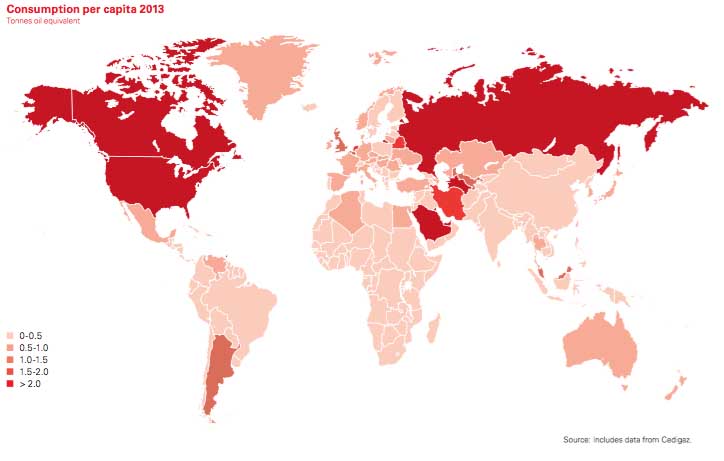
Welcome to the hydrocarbon economy. As the name suggests, organically hydrocarbon is comprised of hydrogen and carbon with a majority off them naturally occurring in crude oil. They are the primary energy source for the 21st century mankind, contributing to most of our human progress since the late 18th century. One of the earliest mentions about hydrocarbons were in the usage of asphalt during the construction of the wall of Babylon (as per Herodotus) and during the time of Moses’ birth, where he was placed in a papyrus basket coated with tar and pitch. There have been documented uses of oil at various times since then across the world in Persia, China, Burma and in places that constitute the current Middle East. Since 1847 when James Young first discovered the process to distill kerosene, hydrocarbons have changed the course of human progress for the better by their uses in lighting (kerosene), lubrication (heavy ends that remained from distilling kerosene) during the early stages to wars (most of the conflicts since Second World War) and modern transportation (till date 90% of the transportation needs are met by hydrocarbons). Between 80-90 million barrels of oil are being produced daily (this figure was in 2014, in January 2015 it stood at 94 million barrels) and the consumption rate slightly north of 90 million barrels. The margin between consumption and production is around 5-10 million barrels and the main consumers were US (19%) followed by China (12%). Technological, political and economic developments in these countries play a major factor in determining oil prices, till such a day when the Indian economy should take off.

The greatest uses of hydrocarbons are as fuel of combustion, particularly in motor fuel and heating application. When hydrocarbons are burned, they release carbon di-oxide which is a greenhouse gas that causes ocean acidification and increase in world temperatures by one degree Celsius contributing to global warming and climate change. As explained in an earlier post, many of the commodities, which are created to feed the urge to consume, are derived from an increased use of hydrocarbons. If materialism can be a cause for climate change, the effects from an increased consumption of hydrocarbons cannot be denied.

Conundrum in its simple definition by Merriam Webster means a confusing or difficult problem. A majority of the hydrocarbons being consumed today are being used to feed the world’s surging population because the whole concept of Green Revolution has been built on the availability of cheap oil. One startling estimate by world renowned Michael Pollan puts its as follows:- 10 calories of fossil fuel energy is needed to produce one calorie of food energy. The major consumers in this wasteful equation are the industrial practices on which the food system is built- inefficient growing practices, food processing & storage and the food transportation system that stretches for kilometers between the producer and consumer. 40% of the energy used in the food system goes towards the production of artificial fertilizers and pesticides, 23% percent is being used in processing and packaging and another 32% is used in home refrigeration and cooking.

Juan Pablo Perez Alfonzo once said, “Oil is the Devil’s excrement”. Most of the conflicts in today’s world can be traced to petroleum politics a fact highlighted by movies like Syriana including others. Much as today’s evangelists on climate change and global warming doesn’t want to confess, hydrocarbon economy remains a conundrum till date. Whether you like it or not, the course of modern human history will continue to be determined by hydrocarbons.

Image Courtesy: BP Statistical Review of World Energy June 2014

Materialism & Climate change

Have you guys ever heard about the Little Ice Age? After Christopher Columbus discovered the Americas in 1491, there was a surge in exploration activity, resulting in one of the earliest intercontinental human migrations from Europe to the Americas. The natives, who used to clear the forest regularly with fire and agriculture, were destroyed in swaths not by weapon but by 20 lethal diseases that accompanied the explorers. These diseases are now believed to have resulted in the death of about 95% of the natives that lived in North America, in what is now known as the ‘greatest demographic catastrophe in human history’.  This resulted in a huge reforesting exercise that drew down the atmospheric carbon dioxide resulting in the Little Ice Age (1550-1800).

2015 has been a very hard year. Plunging oil prices has resulted in a brutal economic slowdown especially in my home province of Alberta, Canada, which is also home to one of the largest oil deposits outside Saudi Arabia and Venezuela. The Canadian dollar has fallen and so has the purchasing power of many common people including myself. These days I get inundated with emails from various retailers trying to sell merchandise at basically rock bottom prices. Target has already closed shop and many stores including Future Shop has been dismantled. Shopping malls are literally empty with a sombre mood everywhere.

When I look back to those booming days, I could remember that there was a time when we simply brought stuff incessantly. Sometimes I get this lingering thought in the back of my mind as to why this consumerism that causes the subsequent materialism. Yes, these are indeed the fruits of capitalism. Advertising and marketing has reached an advanced level where it coerces us to queue in front of stores for hours, just to get hold of the latest electronic device; we are also ready to part with our personal information to software companies who makes windfall profits from them. One has to just look at the craze that accompanies Black Friday, Boxing Day or those flash sales that happen every now and then. Every day of the year is being commemorated for something and we just buy, buy and buy to gift someone or even ourselves. I still remember an old acquaintance that actually had to buy a bigger house because his small house became filled with stuff as he was simply addicted to shopping. Do you remember those home renovation series on HGTV where the presenters plead with the people to get rid of what they do not need before purchasing anything, most of the time to deaf ears ?

The Intergovernmental Panel on Climate Change in its fifth assessment report (AR5) released in 2014 reported that the scientists were more than 95% certain that most of the global warming is caused by increasing concentrations of greenhouse gases and other human activities. The United Nations framework of climate change mentions that deep cuts in emissions are required and future global warming must be limited to below 2C, relative to pre-industrial level. In a paper written by the Worldwatch Institute in its annual report, State of the World 2004, unsustainable over-consumption which till recently was associated with developed countries is now widely prevalent in developing countries. The report had these words to talk about the rising ‘consumer class’ of the world which is at least 30% of the world’s population and are mostly concentrated in the developing countries:

“Consumer class”—the group of people characterized by diets of highly processed food, desire for bigger houses, more and bigger cars, higher levels of debt, and lifestyles devoted to the accumulation of non-essential goods.

Is consumption bad? No. It had helped initially to meet the basic demands for proper living standards and creating jobs. But the over consumption due to an aggressive consumerism has resulted in challenging the basic natural systems that we depend on such as air, water and not to mention its devastating toll on ecosystems, natural resources etc. It has also made it harder for the world’s poor to even meet their basic needs. Rapid globalisation has ensured that what was once considered, as a luxury is now a necessity in many of the developing countries. The whole debate on climate change has been cleverly manipulated by the western powers to poke the developing countries to reduce their emissions, slow down economic progress and subsequent consumption. Little do they realise that all these are a consequence of their lifestyle and subsequent materialism. William Rees a professor at the University of British Columbia mentions that the current economic paradigm, which is based on increasing human population, economic development and standard of living, is no longer compatible with the biophysical limits of the finite earth.

Materialism is defined by Merriam-Webster as a “way of thinking that gives too much importance to material possessions rather than to spiritual or intellectual things. In North America, it is widely believed that materialism is important to pursue the good life. It has been documented that from 1970-1990s, the percentage of people who actually believed that attending college or further education to obtain financial gain increased from 40-75%. Today that number may be higher.

I wouldn’t say that it is bad to be rich or prosperous, but with increasing wealth, we have to be cognizant of the fact that we need to have a balance with respect to our consumption patterns. We cannot keep buying clothes that we do not wear, food that we do not eat and throw away, electronic items with incremental changes without recycling what we already have, incessant shopping of materials that we do not need. We need to understand that every commodity that we purchase has a human value to it and also an environmental value to it. An iPhone uses all sorts of materials from glass, silicon (semiconductors), lithium (batteries) etc. most of which are sourced from mining. These do have an adverse effect on the environment.

I do not want to sound as a hypocrite here. I am a big consumer of electronics and am equally responsible for many of the cardinal sins that are mentioned in this post. In the beginning of this post I mentioned how we had a Little Ice Age when diseases killed millions of American natives. Today the debate on climate change centers on reducing the warming temperatures to less than 2C. With an increasing global population tipped to be 9 billion by 2040, the only leverage that you and me has in our hands today is adjust our consumption accordingly to what we actually need and not what we want. Only then can we leave an earth for our future generation to call as home.

“I was part of that strange race of people aptly described as spending their lives doing things they detest, to make money they don’t want, to buy things they don’t need, to impress people they don’t like.” Emile Gauvreau

Image Courtesy:

  1. http://pixabay.com/static/uploads/photo/2013/11/24/10/18/earth-216834_640.jpg
  2. http://coldfusion3.com/wp-content/uploads/2014/11/polar_square.jpg
  3. http://www.redorbit.com/media/uploads/2013/05/Materialism_050213-617×416.jpg

Goliath

“Everybody pulls for David, nobody roots for Goliath”

Wilt Chamberlain

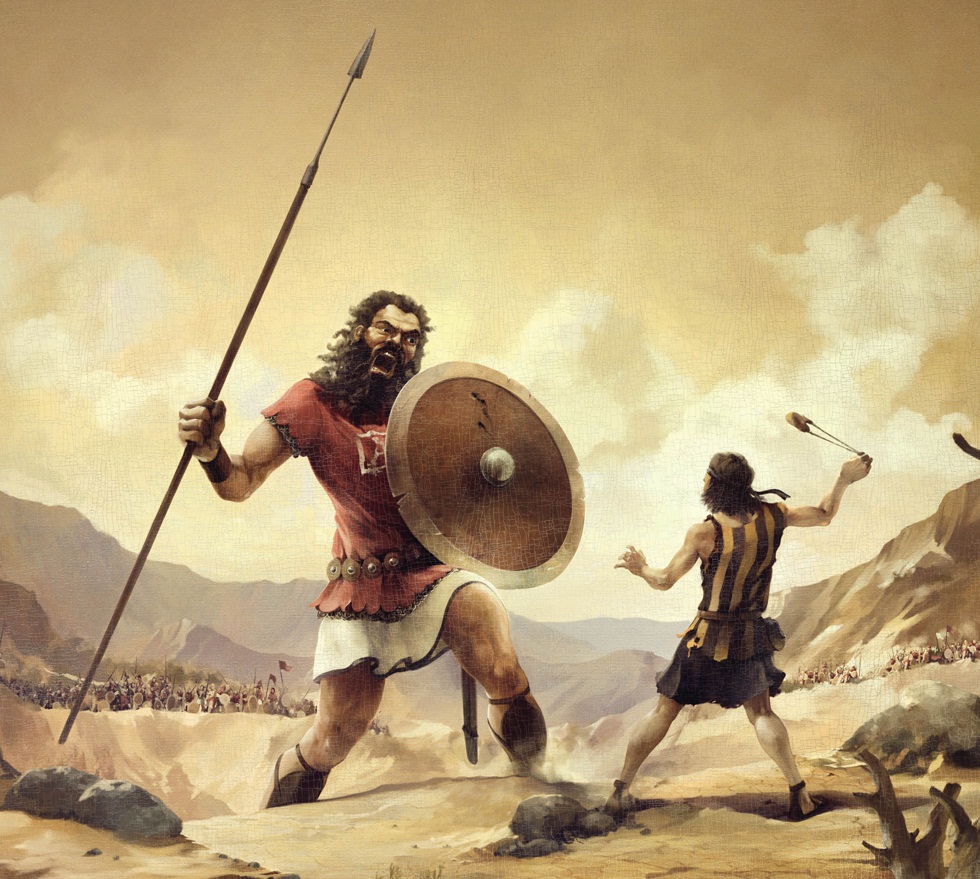
The classic story of David and Goliath, where the underdog beats the giant resoundingly is the stuff of Biblical legends. Everyone knows the story of how the Philistine warrior giant challenged the lowly nation of Israel only to see him killed by a sling throwing young shepherd boy. This a story, which has been dissected a million times mostly to explain the surprise quotient the underdog, possesses prior to any battle. Malcolm Gladwell in his book David and Goliath: Underdogs, Misfits, and the Art of Battling Giants gives an alternative explanation where David was well prepared when compared to a bumbling and sick Goliath. According to him the latter was never a match for the so-called underdog due to many reasons and there was actually no element of surprise. However you look at this tale, Goliath had a sad, tragic and a brutal death.

Who then was Goliath? If you want to properly understand the story of David and Goliath, you cannot neglect a third person who is never mentioned directly in tale but who was affected severely by its outcome-King Saul. Being the first king of Israel and a warrior just like his successor David, he was a victim of the internal politics present in Israel at that time. Since he was from the lowly tribe of Benjamin that had notoriety at that time across Israel, he was not widely accepted by all the tribes. King Saul, who was mentioned to be the tallest and the most courageous man in Israel, was cowering with fear at the sight of an equally sized adversary in this tale. In a match-off between two giants, Saul was waiting for the theatrics of Goliath to play out since the latter was having a field day with his taunts at his adversary. It is fair to say that at this time of combat, while Goliath taunted them for 40 days, Saul did nothing. Since Philistia provided the Israelites with their weapons, they knew that it would be hardly a conquest between these two nations.

The fall of Goliath was very much the failure of King Saul than the success of David who ended up being the future king of Israel. I would like to think of Goliath as an analogue of King Saul. Both were legends in what they have accomplished for their respective countries and both were usurped of their glory at the same time or disrupted by an young, innovative shepherd boy. Both were giants in stature and nobility- which they attained through some luck and hard work (The Bible vividly explains the advent of Saul yet there are no records however on Goliath.)

On June 29, 2015 it would mark the eighth birthday of the Apple iPhone. Before that, Apple was known as a company that made the iPods and struggled to come out of a disastrous bankruptcy, which literally destroyed the company. Two companies- Nokia, a Finnish company that made dumb phones and Blackberry that made smartphones, owned the mobile sector in those days. The former was so hugely popular that it at one time owned up to 51% of the global market share in mobile telephony. Blackberry at the same time was the synonymous with what smartphones were at that time and the perception then was that it would be the same forever. Both companies made their mark in their respective fields and as success and popularity surged, they started to become complacent and began slumbering. Nokia had a horrible OS called Symbian that it took forever to update and Blackberry or Research in Motion as it was called then, was so arrogant that I remember a time when I was asked to pay an annual fee only to obtain customer service!! Today Nokia does not make smartphones any more and Blackberry is more or less an epitaph. Michael Dell in 1997 famously remarked that if he were Steve Jobs (who had then returned to Apple after a long hiatus to rescue the company) he would shut Apple down and return the money to its shareholders. Dell at that time was a personal computing mammoth owning up to 30% of the market share. Today Dell is a private company whereas Apple has a cash reserve in exceedance of 175 billion dollars. Most of the time the credit is given to the interrupter but I think most of the fault lay with the incumbent as with time, success makes them lazy, incompetent and complacent. This was similar to what happened with King Saul and Goliath. It was actually easy for David to kill two birds with one stone, which he did as he flung the stone to Goliath breaking his skull.

As I mentioned in an earlier post, every company no matter how big it becomes, must always keep disrupting it’s field of business through continuous innovation and relentless pursuit of creative, sustainable and meaningful ideas. I can provide many examples where giants in the field are toppled because they failed to do so accordingly. When a company stops innovating, it stops growing, causing sustained decay to commence. Bureaucracy will creep in, decisions will get delayed, infighting and politics will ensures that  people who need to work and keep pushing the company ahead, instead end up fighting among themselves. With time, the company ceases to exist as it happened in the case of Nokia cellphones (which was later purchased by Microsoft), Palm and many other companies.

The story of David and Goliath would have been different if Goliath was proactive, attentive and crafty not to engage David. Instead the Bible quotes him as a man who was full of himself. He gave himself away in a platter to David who felled him by a slingshot. More than we would ever like to admit, there is a Goliath in each and everyone of us. Most of us work hard in our lives both personally and professionally, seeking a meaningful existence and reasonable wealth to sustain us throughout the days of our lives. After we reach the pinnacle of our lives, we get tired and complain about our lives forgetting what it actually took us till that spot in our lives. We become bitter and complacent with our lives and instead of moving on, we stop confused. Do you want that life or do you want an exciting life where you never settle, never conform and always think different? Do you want to be the Goliath that people actually root for?

Image courtesy: http://bible.wikia.com/wiki/File:David-Vs-Goliath.jpeg

Never Conform

Recently while researching about group dynamics among people, I stumbled upon a decades old set of psychological experiments conducted by Solomon Asch in 1951. These pathbreaking experiments show how societal pressure causes a person to conform.

Conformity (spelled as [kuh n-fawr-mi-tee]) is defined by dictionary.com as an action in accordance with prevailing social standards, attitudes and practises. Solomon Asch’s experimental procedure was very simple. Collect a set of ‘confederates or actors’ in a room with a real test participant who doesn’t know that the others are playing according to a set script. A vision test is presented to the room where the actors answer incorrectly on purpose. It was found that this action caused the participant to conform and begin answering incorrectly. In about 18 trials conducted by Asch, the confederates gave incorrect answers to about 12 trials. 75% of the participants conformed to the majority view over a series of experiments. Most of them confessed later that they did not believe in their answers that they provided. But they instead went with the group for the fear of being ridiculed or being thought of as “peculiar”. Solomon while analyzing the participant results mentioned that there are two reasons why people conform:

  • Normative influence: Because they want to fit in the group
  • Informative influence: Because they believe that the group is better informed than they are

Does the above statements ring a bell to you? Growing up in India or the Middle East, I have seen countless times how I was forced to adapt to a set thinking that was developed or defined by someone unknown to me. In an example of normative influence, you had to do what you were told to do in order to ‘fit into the crowd and have a better life’. The Indian education system prepared students in such a way that while wearing uniforms to the school, you were considered equal in a class of 40 or something. You had to study the same materials, memorize them and spit them out in examinations. The system assumed that everyone had the same abilities and the society always encouraged those who could memorize the given subject matter and score exceptional marks in the exams. Those who did not have any ability to memorize but were proficient in other skills were derided and humiliated till they fit or adapted themselves into the system that was created over the years and was one that was meant for subservience. This meritocracy was designed for individuals till they reach adulthood. One was then asked to find ‘government jobs’ or ‘private jobs’ where he/she worked, later married and lived happily ever after. The system (in an example of informative influence) ensured that you were ‘conformed’ and ‘designed’ to be a well-paid and industrious servant.

I would like to believe that many of my readers have watched the movie The Prestige. If you recollect, you can find how the team members of the magician ensured that the trick played to the script by infiltrating the audience and participating in it. If you remember the tale of Good Friday, one can clearly see how the Sanhedrin clearly infiltrated the crowd with their supporters and conformed them into demanding for Barabbas instead of Jesus. Think about how the Christian Church destroyed any remnants of science or rational thought for centuries by conforming people who may think different to be silent, threatening them with excommunication to even being burnt alive in a stake. Think about how day by day the moderate Muslim community is being asked to conform to acts of violence done because of the skewed definition of their religion by a few retards. Think about how the media shapes up or ‘manages’ public opinion by keeping people conformed to their definition of what is right and just. There are countless examples such as these. Think for a moment about yourself, who is being asked to conform to a lacklustre career and mediocre life due to societal or family pressures and think where you would be if you actually begin to have a different vision or objective for your life.

Last month this blog marked a major milestone when I published its 100th post. I have been blogging since 2007, showcasing various lessons that I have learnt cruising through adulthood. The vision for this blog is the same. It is to provide you my dear reader with the encouragement to have your own opinion and not conform to what a group, society or organization thinks about you. I would like to leave the reader with a famous Apple ad which outlined their vision.

https://www.youtube.com/watch?v=nmwXdGm89Tk

Concluding, I would like to urge my readers to always ‘think different’, ‘never settle’ and ‘not to conform’.

Photo Credit: brookeshaden via Compfight cc

Why I hate M&A?

On the morning of March 28, a horrendous news broke about Best Buy closing all the Future Shop locations in Canada. Eventually that day which was feared for a long time by many Canadians loyal to Future Shop finally happened. Future Shop was a Canadian-only brick and mortar consumer electronic store, which was purchased by Best Buy years ago. I was a frequent visitor at both these shops,  but the better terms and conditions meted out to the Future Shop employees made it a better place with a great customer experience over Best Buy. If you have visited any Best Buy location in North America you would know why the company is in red mainly because of the poor customer service. Sadly Future Shop is no more and the brand has been terminated with 500 full-time and 1,000 part-time positions that will also be eliminated. I am a big, big opponent of mergers and acquisitions and no matter whatever is being promised,  most often people who spend day and night striving to build the company end up paying a heavy price.

The true reason why a company gets bought in majority of cases is purely commercial in nature. When a big company gobbles up a smaller company,  it’s a period of transformation for both companies. If proper infusion of talent is allowed between the companies, often it ends up being a good business proposition. When two companies with different cultures collide and amalgamate,  most of the time it ends up acrimoniously. The last company I worked with was gobbled up by a large state owned foreign company.  Even though promises were made to retain all employees, hundreds of people were sadly laid off eventually. I moved on quickly before anything like that happened to me. But I personally witnessed the bloodshed of the culture,  values and the spirit of the company that I once was proudly part of. There are many examples like that all over the world. One good example would be when Microsoft took over Nokia’s mobility division, it led to one of the most beloved names in cellphone business ceasing operations for a while and in the name of consolidation, it butchered the livelihood of thousands of people.

Another fact that you must have noticed is that M&A might be designed to stifling competition but  doesn’t always achieve the desired outcome. I hate monopolies created by M&A and most of the time they falter after a while as they forget to innovate. Sirius and XM were two satellite radio companies. Today they are one company that was formed when Sirius Radio purchased XM radio. Recently I was reading how the company is faltering as no one cares about satellite radio anymore and would only day prefer a music streaming app like Spotify. When Best Buy monopolized the Canadian electronic market,  it wasn’t able to match up to the nimbleness of an Internet giant like Amazon.com, which rendered the brick and mortar shops to the status of window-shopping centres. It would be years before Best Buy could come up with a coherent strategy to counter the latter.

I have always believed that each company has an agenda for profit making, set of values and culture that it wants to follow to conduct the business and the humans who toil to perform and achieve the business outcomes or objectives. The leadership sets the culture and the vision to steer the company forward. Most of the time, I have seen that once the leadership runs out of ideas, instead of gracefully stepping aside, they end up selling the company, with deals mostly done over a  round of golf (P.S:- I am being figurative here :)).

Today everyone speaks volumes about wireless charging.  Did you know that over a century ago an amazing man called Tesla discovered wireless charging? Since he was unlucky to stand against the might of Thomas Alva Edison, many of his inventions today are sadly footnotes. If the mighty utility companies had the courage to adopt his inventions,  we wouldn’t be seeing these ugly electric transmission lines in our eyesight in today’s modern towns and cities. Also energy would have been made available seamlessly to millions of people who till date live without the benefits of energy.

I have read tales of how Google buys up independent apps, absorb the developers,  shut down the app and move on by trying to incorporate it as a feature in one of their offerings. Most of the time the app developers,  fattened with a huge paycheck leave after couple of years to a relaxing life elsewhere. This pattern has seen itself manifest again and again in the Silicon Valley with all the major companies. Hence due to this profit motive, M&A renders any technology disruption initiatives to a mere whimper.

I understand that the true nature of a business is to generate profit and also to maximize it’s potential to generate greater incomes year after year. But I do believe that it can only happen with a leadership that has the vision and a nimble, inspired workforce that can execute the vision and in fact exceed the expectations demanded by that vision. The company should always keep disrupting it’s field of business through continuous innovation and relentless pursuit of creative, sustainable and meaningful ideas. It should take calculated risks and learn quickly from them to become bigger and better each year. This is the hard way.  M&A is the easiest. Which one would your company take?

Image courtesy: http://media.winnipegfreepress.com/images/800*600/FullSizeRender[1]2.jpg

Be your narrative

Does anyone remember the year 1998? It was the time of adolescence and the emergence of a powerful tool called the Internet. I still remember growing up in the Middle East, how this service that seemingly connected you with the world made its way into our lives. It was an expensive service that gave you the latest information from across the world and the ability to chat and see everyone from strangers to loved ones. It was expensive then at 10 AED ($3 USD) per hour that came with a connection using a telephone dial up connection. It was an exciting new technology and showed how computers that were used in those days for making word documents and playing car /cricket games could be used for connecting with people. Those days were famous for breaking news with the last significant one being the OJ Simpson trial that wrapped earlier keeping the whole world in its tenterhooks. 1998 however came to be known for a different reason. The Clinton Lewinsky affair and the Starr report.

Bill Clinton was a very successful president. He had a fabulous first term where he rescued America from post Gulf War recession onto the path of prosperity. He was rewarded handsomely with a second term and the future of the U.S looked bright like never before. Then came the sex scandals. It hit him hard with revelations from every nook and corner from various women who had sexual flings with the president. One of them stuck on to him like a blood thirsty mosquito-the Lewinsky affair.

What happened next was simply a tsunami of news. People were talking everywhere on how the most powerful man on Earth used the respected White House to have a fling with a intern. It was the topic on the newspapers, radio, television, friends, coffee shops, and even religious places where voices were heard on how absolute power corrupts. Even in this strange new medium called the Internet, we had chat rooms where you could hook up with any random stranger online and discuss the Clinton Lewinsky affair. It was the topic of discussion everywhere. Even though both of them were criticized heavily, however the narrative went against Monica Lewinsky.Then came the grand confession from Clinton that he had lied under oath to the American people. It was hard for the people to forgive the president but he did escape impeachment. During that time till 1998, this issue was the staple diet for news media across the world. Bill Clinton was heavily insulated from many of the criticism because of the immunity he enjoyed as the president. But Monica Lewinsky totally disappeared from public light. She was ridiculed for years and no one heard of her or even spoke of her.

It all changed last week. In the TED talk held in Vancouver last year she came as a keynote speaker to speak about her life and the harassment that she faced. During her hiatus, the Internet developed itself into a mammoth of information including its presence in toppling governments, spearheading change, discussion and also a place where people who freely express themselves without limits. The world of 2015 has shrunk itself into a village place where millions of people have discussions over the color of a dress to choosing the name of a celebrity kid. It is into this world where Monica has resurfaced herself as a champion against online bullying or in some words trolling. She aspired to get hold of her life’s narrative back and also help others script their narrative in a world where you would be booed, jeered and even insulted by strangers before you can take a single step.

Online bullying or trolling depicts the brutal nature of human hypocrisy. It facilitates easy mudslinging in the guise of an online identity to tar individuals and the hard earned reputations. I have seen bullying in both real and virtual worlds. Though it is easy to stand up to real life bullying, it is however not entirely easy to do it in the same way online. Last year during the Indian election, yours truly supported a nationalist candidate for the position of the Indian Prime Minister. Any post if posted on social media drew fierce debates from people misinformed by a corrupt Indian media narrative. Friends quickly turned foes and any difference of opinion was construed as betrayal and was shunned by either blocking or losing of the online friendship. But eventually when my favoured candidate won, many friends were never seen after.

I am not saying that no one has a right to their own opinion. Maybe many of the friends might have felt that by having a different opinion and boldly broadcasting it to their timelines, I am also being a bully. It is hard to say is there a fine line segregating them. However, everyone has the right to script their own narrative. No one should be forced to  accept what is notion of how others think about them or their viewpoint on how they should live their life. We are all the Masters of our own destiny. And we cannot allow anyone to dominate that belief.

Photo by Katrina Wright on Unsplash

Worst Case Scenario

These days I am reading about the exploits of the Israelites who left Egypt and crossed the Red Sea fleeing the mighty Ramses and his Egyptian army. If one were to trace the path the Israelites took and their wanderings, they took over 40 years and one generation to cross an area which their descendants (the modern state of Israel) successfully captured in the Six Day War of 1967. Of the various tales from this long sojourn there is one that strikes a chord in answering the most profoundest of human conditions: the worst-case scenario.

We all have a tendency to get carried away whenever disaster strikes our lives. We tend to think and ponder over the worst that could/may happen.  This causes us to ponder over a time that might happen and the consequences that may occur subsequently.

When the Israelites left Egypt, they got carried away with their pitiable circumstances in the wilderness. Many times they repeatedly rebelled against their leaders and their God. Every time they had their way with their constant and consistent acts of rebellion despite many acts of benevolence and subsistence by their God.

What does this teach us? It is very easy to imagine the doom and gloom scenario. It is very easy to give up and say it is not possible and that you will never get cured from this illness or never get the promotion that you wished for. The difficult part is to believe that the impossible can happen- and that any worst case scenario can be outlived or outgrown. Every circumstance in life that we are thrown into challenges our belief systems. It is easy to feel isolated, dejected and even defeated. It is easy to give up and throw in the towel. We find ourselves dejected at times on the slow progress made in the wilderness of our lives. The hardest part is to believe that anything can change or improve. But most of the time, it is the only channel of hope that we have for further progress.

In the story of the Israelites, when they sent out twelve spies to check out the so-called fertile lands of Canaan. All of them came back mentioning about the giants that occupied that land, yet just two out of the ten came back with a proposal that we can take the land through faith. When the general consensus went against the two, the Israelites found themselves roaming a wilderness for forty years and a generation, before they took the land that they to this date call home.

Some days ago, I was listening to a podcast by Michael Hyatt where he interviews his show host Michele Cushatt for an episode titled Making peace with an unexpected life’. She mentions about the various struggles in her life in addition to fighting with cancer. There she relates her life to the story of God providing the Israelites with manna from heaven. The Israelites were specifically instructed to collect the manna that fell from heaven that they just needed for each day. But like any human being, they kept collecting much more than what they actually needed, thinking about the future. What happened was that in the night these manna became maggots and had to subsequently thrown away the next day. The point being illustrated here was that even in the wilderness, God gives you subsistence that you just need, nothing more, nothing less. You can read more about Michelle in her book Undone: A Story of Making Peace With an Unexpected Life.

Our fears and apprehensions regarding the future of ourselves and/or our loved ones may come true and we could be cast into the wilderness of life. It is important for us to remain strong in faith and to continuously believe as we sojourn through that wilderness, believing that the oasis of comfort and relief will be reached sooner than we can think.

Summarizing, worst-case scenarios that you fear today may or may not come true. But you can actually use it to make it your best-case scenario.

Image: Gathering of Manna by Francesco Bacchiacca