
Decoding the Temptation of Christ

This summer as part of my spiritual journey in this world, I decided to be on a different type of mission. Experience the Bible differently-i.e., by listening to it. There is an app on the iPhone called Bible Gateway where it is now possible to listen to the Bible, especially the best version of them all, the New International Version. I decided that in the course of summer, I need to cover all the 4 gospels by hearing the verses, exactly in the same way I would have rather read them normally.

Very quickly into my mission, I got absorbed with the gospels and the sayings of Jesus Christ. Many of the verses, which would have been a normal reading staple became alive quickly and started challenging me both mentally and spiritually. Suddenly a thought came into my mind as I finished each gospel is what did Jesus actually achieve here? Here was the all powerful Yahweh who single handedly formed one of the largest races of humans just because a pastoral trader Abram had the audacity to believe in his promise; appearing in the form of a carpenter’s son, just when his beloved children were crushed mentally, physically and spiritually by the brutal Roman occupation. Their religious texts had promised them a saviour, a Messiah who would redeem them from their oppression and occupation, and lead them to a new Messianic kingdom that would fill all the corners of earth.

What happened was just the opposite. Jesus appears on this earth, gathers a motley bunch of people and spoke salvation through faith in him, and conducted miracles on afflicted people across the spectrum of society and then provoked the teachers of the day i.e., the Pharisees who were pushed to their limits by this, and conspired along with the corrupt high priests in successfully crucifying him. Defying all human logic he rises again on the third day, appears to his disciples and sends them on a mission to spread the word across all the world to both Jews and non Jews. They were very successful in whatever they did and in no time Christianity swarmed the world. The Jews were mercilessly massacred a few decades later in their own country and carried away from their lands, not to return until about two thousand years later.

Is this the story of the promised Messiah to the Jews? Yes and this was exactly what was taught to me while I grew up as a Christian. But today as I listened to these gospels once again, my logical thinking was challenged by these happenings as it doesn’t make any sense. Why dint Jesus take the Romans head on, challenge them, defeat them and reestablish the once revered Solomonic Jewish kingdom of Israel? He could have established a Jewish empire that would stretch from one corner of the world to the other and by force (just like Islam) convert people into believers and obedient citizens in this new kingdom of God?
But the Bible being eerily different ensured that the story of Jesus was also the same. This contradiction made me think for a long time.

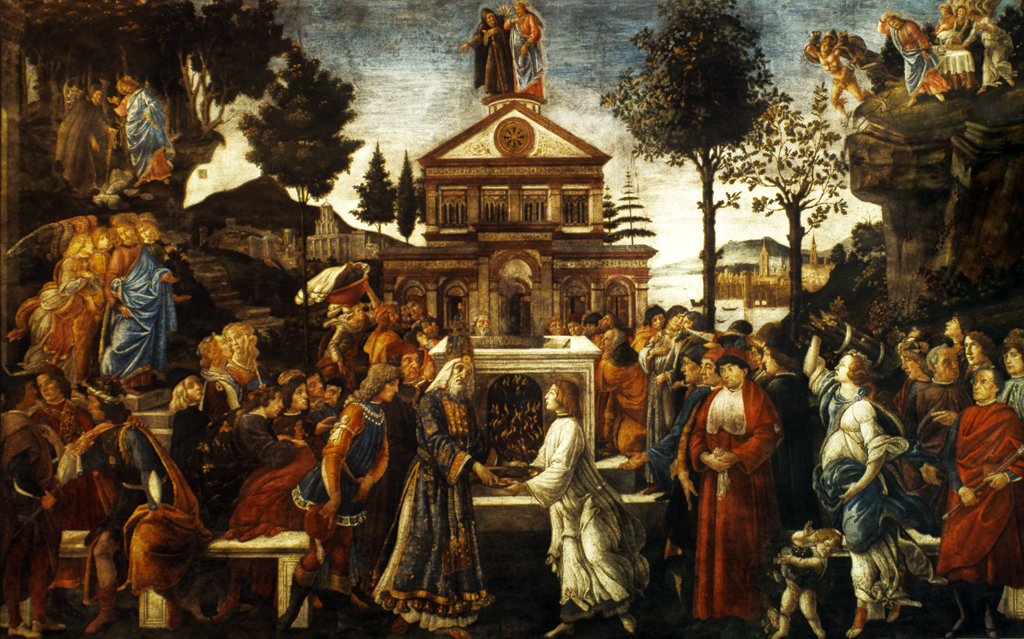
Few days ago, I found my answer. It was in the temptation of Christ by the angel turned arch foe Devil. The eternal battle between God and Devil, good and bad, right and wrong has been played out to perfection in countless forms of media and arts. This whole sequence of Jesus going into the wilderness, fresh from his baptism by his friend John the Baptist, to fast and meditate for 40 days and nights and being tempted by Devil is an ultimate Biblical play of dramatic proportions.

Seeing the hungry and physically Jesus, Satan tries to provoke his divinely power to feed and care for himself by asking him to convert the stones in the wilderness to bread. Jesus replies in the negative by saying that man should not live by bread alone but by every word that comes from the mouth of God. The significance of the breaking of bread and blessing of it and the wine in the Last supper and Christian communion ceremonies shouldn’t be missed here. Jesus clearly explains his priorities that he didn’t come here to provide the people with just about food that would meet their short term goals of sustenance, just as a normal earthly king would have done to them.

In the other temptations where Devil takes him to top of temple and jump from there because the angels would rescue him, Jesus again dashes the hopes of Devil by saying how important it is not to put God into test. This explains why even during his short lived and tragic earthly ministry he never for once called anyone to help him out and suffered all his tribulations in silence.

Thirdly when the Devil promises him the entire empires of the world only if Jesus would fall on his feet and worship him, Jesus aggressively pushes the Devil away by saying that it is important to worship the one and only God.

These three acts in the temptation of Jesus by the Devil is very important in understanding what was exactly Christ’s mission on this earth. The Jews hoped for a king and a saviour who would provide for them (bread), protect them using divine resources (angels) and lead them to a lasting and powerful empire that would stretch all the four corners of the earth. That would have him made like a mere dictator the likes of which we see and oppose even today in our modern democratic societies.

Jesus’ mission on this earth was to setup a lasting kingdom where everyone was the one and the same, where everyone cared for each other, and lived in happiness and prosperity in seeking out the truth. This is the ultimate state of nirvana, and he taught us the way to it through his life and mission on this earth.

Image courtesy: http://westerncivimages.com/items/show/2764

A dialogue on Iraq

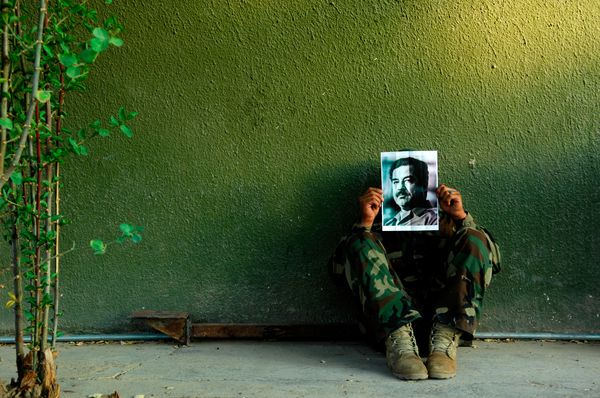
iraqi-artists-venice-biennale-saddam-face_68089_600x450

It was 2003 when President George W.Bush declared a war on the Saddam Hussein led Iraq. The war from the beginning to almost a decade was a major mess due to the intransigence of the American regarding the Arab culture. However one of the main objectives of the President Obama in his first term was to get the American soldiers out of the Iraqi soil, safe and sound. The world media which bombarded the entire population of the earth during those days with news from the beleaguered country moved on to safer pastures and the whole war was very quickly forgotten.
AlJazeera the effervescent Arab channel did an excellent followup on what is happening in Iraq now by conducting a road trip across the country through all the Kurd, Shia and Sunni areas. The documentary was an eye opener and can be viewed here.

Iraq has always been a difficult country due to its diverse, ethnic and contradictory mixture of three major sects, the Shias, Sunnis and Kurds and their infinite subdivisions. Americans when they attacked the country in 2003 wasn’t prepared for the aftermath of the post Saddam era, were in for a greater surprise as the sectarian rifts exploded into the public. The presence of the US led foreign forces and the clash of agendas and ideologies ensued that Iraq became a collateral colossal mess. The cradle of civilization now became the carcass of the 21st century.

People say Iraq under Saddam Hussein was much better as the basic amenities of life was taken care of then. He ruled Iraq with a cruel fist and he was by no means a benevolent Sunni ruler. He ensured his caste was treated well and subjugated the Shia and Kurd faction with atrocious brutality. He also turned back on his Sunni allies by attacking and ransacking one of them-Kuwait. Getting rid of him was quick, but the scars of his decades old misrule triggered a chain reaction of worst sectarian strife that nearly consumed Iraq.

FUTURE

Iraq today is in a point of no return. I can see it is very difficult for the country to stay together as one. The reasons stem from unresolved issues from the time Ottoman empire was shredded into pieces by the colonial powers and mapped for administrative convenience showing total disdain for the ethnic and cultural differences among people.

What is the way forward? I believe it is autonomy. Iraq needs to be split into a federal structure of autonomous provinces like Canada by giving due concern to the various ethnic divisions among the Iraqi people. The enormous oil wealth needs to be developed and the benefits used for the benefit of the entire Iraqi population. People needs to be put to work, roads need to be built, the militia needs to be disarmed and the country needs to find its lost awakening.

Iraq is a country blessed with a highly talented work pool. During the beginning years of Saddam Hussein’s rule, he was so good that in the late 70s, UN awarded him the award for the best administrator. Railways were built, roads and all the infrastructure that is seen today was built in the 70s. It is a pity that the wars in 80s, 90s and 2000s reduced it into a heap of rubble.

The story of Iraq is one of unimaginable tragedy. A country that looked so promising in the 70s fell like a pack of cards, totally destroyed and decimated. Will it return is going to be the question for the 21st century ?

Image courtesy: http://cdn.cyberpunx.com/g3/c7c2d5d0aa17686d2ed0e4223ed05a75/rs/War-Chaos-Propoganda/iraq-misc/future.jpg?m=1322778931

The Act of Dining

Dining-Table

I have always felt that good and inspired dining is always a great way to relax and invigorate. Dining is different from eating, the latter is just another way to fill an empty stomach. Dining to me is an extraordinary experience very similar to an onstage performance, where the actor serves the content in a platter to an eager and enthused audience. As one knows that it is important that he serves the best part of the act to the last, slowly building up the expectations to that grand finale.

The Starter:

Starters prepares the diner to what is to come. Think about a time when you were really hungry and wished you had a three course meal in front of you. And then suddenly, voila! you find yourself in front of a well prepared table and a server right in front of you, eagerly awaiting your orders. The three course meal lets say is all paid for and you are given a menu having the choicest of any dishes in it for free. You browse through the pages and decides to start with a drink and an exquisite and tangy salad. The waiter listens to your command and promptly goes inside and brings your order. You see the drink and thirsty as you are, takes royal sips from the drink, indulging in its exquisiteness. The salad that is presented in front of you is so welcomingly green ready to embrace you with its uniqueness. Alternating between sips from the drink and chewing of the salad and listening to some beautiful symphony, you begin to tease your stomach to what is to come.

The Entrée:

It is the main part of the dining experience. All this time, you pampered and teased your empty stomach for this very moment. It is a moment of sublimeness and a moment of reckoning when the act on the stage by the performer begins to reveal the depth and grandeur of the tale that he is performing in front of his audience. The entrée reveals the plot without giving away the ultimate suspense or the twist that is to follow. It is voluptuous, interesting, exciting and different. It is what you are here for and the your stomach savours it slowly and slowly, praying that the feeling of nirvana doesn’t end.

The Dessert:

This is it. The culmination of the act. The suspense, the twist in the tale, the culmination of the battle between the good and evil, the battle between the protagonist (the food) and the antagonist (the hunger) finally ends. There can be only one outcome, a win (feeling great) or a loss (disappointment). The dessert is the fitting finale to an impossible act, the act of dining.

Image Source: http://beenhere2.com/wp-content/uploads/2013/01/Dining-Table.jpg

The holy month of Ramadan

Image

I was born and raised up in an Arab country. Being in a predominantly Muslim country, one cannot ignore the piousness that accompanies an important religious event like Ramadan. This 30 day fasting period, where all the devout fast from dawn to dusk is one awesome special occasion, especially in an Arab country. The day from morning to evening, wears a tired boring look. But it is in the evening, as the hot Arabian sun sets, when the real fun begins.

Following the ‘iftaar’ prayers, life just….explodes. Shopping malls gets crowded, people get active, parks full, music, dance and all types of festivals adorn the landscape. It is a time of celebration and rejoicing. Add to the mix the cool Arabian breeze that adorns the evening, the majestic feeling that follows is beyond words.

Ramadan used to be a fun experience while growing up. Respecting the limitations of many of the believers, the schools and workplaces worked on much reduced work schedules. This was done to ensure that everyone gets home before the fast is broken and can be with the family to have good and quality family time.

Reminiscing the Ramadan days during my childhood, there are lots of stories worth telling. The local radio stations used to have quality Ramadan programming. There was one program I used to listen to almost every Ramadan. The program was hosted by an Islamic author who used to tell some really awesome stories from the rich Arabian history starting from the wise caliphs and their caliphates, the advancements of the Arabian civilization in science, trade, culture etc. These stories showed how tolerant these rulers were at their time and how they used to treat everyone with fairness and justice. They were also visionaries and how they ensued the prosperity of the Arabic civilisation which at its prime stretched from southern Spain (Andulasia) till modern day China.

Those stories were inspiring and I used to take the time and effort to read the religious books including the holy book of Quran. The stories are so similar to the ones from the Bible and it stresses about respecting and religiously adhering to an all loving, all forgiving and all welcoming living God. Islam stresses on a much disciplined and a reverent approach to divinely matters when compared to its older cousin Christianity.

Ramadan is a very holy and sacred month for Muslims all over the world. Prior to the break of dawn, a meal called Suhoor is taken. Once the fasting begins, the faithful refrain from everything and spend time meditating and reading the Quran. It was also believed that prophet Muhammed wanted the faithful to experience abstinence to understand the life of poor, hungry and needy. The dawn to dusk period is not one of merely abhorring all the comforts of the world, but a period of prayer, discipline and enlightenment.

Zakat is another offering given during Ramadan when a fixed percentage of one’s income is given to the needy. I still remember the tale of a Keralite who went to visit one of his friends, who was then working in one of the rich Arab homes as a security guard. It was the time of Ramadan and he arrived early in the morning. The non believer friend stayed indoors during the day. In the evening, as the fast was being broken, he ventured out of his friend’s home to check out of his surroundings. Unknowingly for him, he was still in his native clothes and forgot to put on his shirt and trousers. As he ventured out of his friend’s tiny house by the gate of the mansion, he was viewed by the guests of the rich Arab who had come to the house earlier to break the fast and partake in the iftaar banquet. On seeing this immigrant in native clothes, they mistakenly took him for a poor and needy person and showered him with enough riches, that he became immensely prosperous in life. There are many stories like these that shows the magnanimity of the holy season.

It is still a challenge to complete the entire fasting requirements for a 30 day period. In places like North America, it is a daunting challenge when Ramadan falls in the lengthy summer months where the days are insanely long (about 18hrs). But such is the belief and faith of many of the believers that they ensure that they complete the entire fast with self control and perseverance.

Ramadan is indeed a holy, sacred and a revered month for millions of Muslims all over the world. It is also a visible reminder to many of the non believers the power of human discipline, perseverance and self control to overcome any challenge posed and using these experiences to instill in oneself a disciplined and enriching life.

Image link: http://cdn.theatlantic.com/static/infocus/ramadan081712/s_r01_RTR35A9L.jpg

Chrome OS: The Future

The world of technology is changing very rapidly. Due to the stupendous success in miniaturisation of integrated circuits (IC), the computing devices are getting smaller and smaller in size. Add to that the immense potential of cloud computing, you have modern devices with a physical hardware. software user interface and all the services stored far away in what is called the computing ‘cloud’. The sudden explosion in the use of portable handheld devices of these days is mainly due to these developments. Into a world filled with PCs. Macs, iPhones and iPads, a small but simple innovation is slowly making waves. Enter: Chrome OS.

During the years of my undergrad education, Google was the main goto place for all things information. I still remember with pride the days when rumors of Gmail first surfaced and how it was an invitation-only service. When I first got my Gmail invite, I was overjoyed to setup an account and could see the potential in this different take of email by Google. Without any delay, services were added on top the platform beginning with Google Talk, Orkut then slowly Google Docs & spreadsheets, Google Labs, Google Wave etc. These developments were contrary to the rumors that surfaced in those days regarding the emergence of a Google OS which was spoken of, and yearned for in high regard.

Those were the days of an over bloated Microsoft and its Windows platform which dominated the entire computing world. How much I hated that ecosystem in those days is beyond words. It was so prone to virus and malware attacks that there a system formatting at least once in 6 months. Add to that the ugly Internet Explorer which couldn’t even be deleted from the system and the notorious blue screen of death. Even though Mozilla Firefox came as a redemption, it couldn’t successfully dislodge the notorious Internet Explorer.

Enter Chrome browser, Google’s bastardised version of the Firefox browser. It became so popular quickly due to its many quirky features. It was well received. But the users were still waiting for the OS messiah that would rescue them from the evil clutches of the evil, fat and stubborn Microsoft Windows.

Apple came into the scene with the OSX platform for their iMacs and Macbooks. The success of these devices were limited by their lack of availability elsewhere in the world apart from North America and Europe and add to it the exorbitant costs with owning a Mac. The Mac vs. PC campaigns of those days did dent Microsoft’s reputation and they resorted to copying many of the features in OSX which made its way to the much reviled Windows Vista and later the respected Windows 7. Apple quickly moved to aggravate the demise of the PC era by concentrating on iPods, iPhones and iPads which quickly became mainstream and popular.

Google after accumulating all the information in the world, quickly realised that the future was in cloud computing. They aggressively developed the Chrome browser and its capabilities in addition to providing value added services in productivity, leisure, entertainment etc. by developing webapps for the purpose. Due to the inherent power of cloud computing it was simply easy to accelerate the progression to a hardware-free and software-based solution to today’s computing needs. Partnering with all the industry leaders, they developed Chromebooks which were dirt cheap and a better alternative to the extinct netbooks.

Due to the rapid development in Internet connectivity in schools, these Chromebooks were quickly introduced there. Especially in North America, they became quickly popular. This success was bolstered by the power to communicate through Google Hangouts, productively collaborate through Google Drive, access to the world’s information by Google search, entertainment and knowledge by Youtube etc. The potential of this OS is breathless, especially in the field of education. Add to that these devices are so dirt cheap, the OS is hardware independent and updated constantly; all that one needs is a Google account and he/she can access his/her work/data anywhere on any device with access to an Internet connection. Since the OS is device independent, there is no question of virus or malware attacks of any kind.

This to me is the power of modern computing.  The ability to transcend all the barriers that prevent effective generation of content using modern computing tools is highly necessary. Chrome OS has been highly successful in enabling the users with these abilities. If any of you haven’t these tools today, please do so immediately so that your content is available for consumption by the world.

This article is in no way endorsed by Google and the views are entirely of the author only.


Why democracy will never work in the Arab world ?

The past few days have been a harrowing experience for democracy in the Arab world. Egypt one of the most populous Arab countries in the Middle East just had a second Tahrir square revolution. This time it was a coup d’etat when the first democratically elected government of Egypt was overthrown by an ambitious Egyptian military. This decision by the army and the polarising opinions from all around the world has exposed the hypocrisies that surround the definition of democracy everywhere. Muslim Brotherhood, an Islamist group which legitimately won the first ever popular vote last year, was overthrown by an over zealous military whose authority was stymied by the post Mubarak era governance of the former.

Arab world since the borders were redrawn by the British and other imperial forces from a century ago, has never been a peaceful place ever. The root cause of many of the problems arose once the disintegration of the Ottoman empire happened and the colonialistic forces adopted a policy of land grab and rule. The turbulence and unrest created due to the colonial rule spilled over into the new countries that quickly rejected colonialism. The colonial powers not one to leave without a fight made sure that through the rag tag corrupt armies in these countries that they were still relevant in determining the destinies of the new nations. Most of these countries saw military backed dictatorships that prolonged for decades. Democracy was a sham and the custodians of democracy all over the world ensured that bastardized forms of democracy was adopted and conveniently followed in these countries in the guise of dictatorships.

After years of subjugation under oppressive regimes, the people aided by improved communication tools like Twitter, internet etc., took onto the streets demanding better living conditions and true democratic governance in what is known today as Arab spring. Some of them were peaceful, some violent but there were huge regime changes in many of the populous Arab countries.

But Arab spring did not improve conditions as this new alien idea of democracy struggles to take root in many of these countries. The main reason behind this struggle is the immense diversity in the various Arab civilisations. If one studies history, you can come across a million races that fused among each other with time in all these countries. The only common feature among these people has been Islam that has been slapped on them during the post Mohammedan crusades and a similar yet different Arabic language dialects spoken by many of them.

What is happening now is an awakening by these people who have been oppressed by their own kind for so long aided by foreign vested interests. Most of the people on the streets don’t have even access to the basic facilities that each human craves for. They are a frustrated, defeated and angry people. Democracy is time consuming process and these impatient people are ones without any time either.

The time is now ripe for a nationalistic leader in the mould of Gamal Abdul Nasser to arise and unite all the Arab peoples of the North Africa. This leader should have the audacity to unite all the warring factions, vision to develop these regions and lay foundation to democratic institutions that would spearhead progress. Religion needs to be kept away and the excessive obsession with the Israeli-Palestinian cause must cease as these two issues distract the region heavily. Unless some drastic steps like these are taken, forget democracy, not even normalcy would ever approach the Arab world.

Picture taken from http://gubu-world.blogspot.com/2012/01/arab-spring-west-and-israel.html

NDTV: A Colossal Media Mess

More than a decade ago, yours truly was one of the happy Indians residing in the Middle East when the first visuals of an English Indian news channel, Star News was beamed into his home. The channel was owned by Star TV of the Rupert Murdoch owned News Corporation International. In a strange twist the entire operations was handled by a little known studio based out of New Delhi, with a name synonymous with the place: New Delhi Television (NDTV).

Those were the days when India bolstered by the liberalisation policies of early 90s, was slowly making its mark in the world map. The new channel had a young, vibrant set of talent of the likes of Prannoy Roy, Rajdeep Sardesai, Arnab Goswami, Vikram Chandra, Barkha Dutt, Sreenivasan Jain etc. It was amazing to see such passion and drive among almost all the reporters in the channel. It had some really good programming and some path breaking journalism. Those days the channel was objective, aggressive and to me it had a suave, savvy reporting methodology. The stories showcased on the channel was highly successful in painting a new young India, its interesting politics, obsession to cricket and Bollywood. This potent mix was well broadcasted by the channel.

In the beginning years of the 2000s, NDTV having made enough money from its once in a lifetime deal with the Star Networks Asia, ventured out into forming its own channel or group of channels: NDTV 24×7, NDTV India and NDTV Profit. The channel with no time topped the ratings and was unstoppable. Many of the stories carried by the NDTV studios like the coverage of Kargil war, 9/11 coverage, first NDA government, ascension of Sonia Gandhi and even the amazingly pulsating election coverage. Who can forget how Prannoy Roy along with Rajdeep used to make the whole election news coverage into an ODI cricket match.

Slowly and steadily, NDTV’s success brought in lot of eyeballs and slowly and steadily it started losing its stalwarts one after the other: Rajdeep let with a huge set of people to form his own channel CNN-IBN, Arnab who always had his issues with Rajdeep left to join Times Group, Appan Menon one of the finest Indian journalists passed away. The channel was left in the hands of a still vibrant team of Barkha, Vikram, Sonia and others.

The group simply grew from strength to strength. By 2008 it was in talks to launch its own Hindi GEC NDTV Imagine, it had regional English news channels all over India and it was simply unstoppable till the 2008 recession gave the group a reality check. Suddenly overnight, the channel crumbled and sold most of its assets. Incidentally it was the time when the UPA 1 government was embroilled in the cash for votes scandal. The silence of the channel in the major scandal did raise eyebrows.

When the avalanche of scandals hit UPA-2, the channel was caught neck deep in the Radia tapes scandal with its Senior Editor Barkha Dutt implicated with recordings of her conversations with lobbyist Radia becoming public. The silence employed by NDTV since then and till date on almost all the scandals of the Congress led UPA 2 government has shown it was it was complicit with one of the most corrupt government India has seen its history. Even during the Anna Hazare Lokpal protests to the emergence Narendra Modi as a capable right wing alternative to fix India’s mess, the channel worked overtime in destroying its reputation among the Indian youth, fond nostalgic memories of non resident Indians like yours truly and everything it once stood for. This media powerhouse has become a helpless tool of the hypocritical Indian Congress party PR machinery.

These days, yours truly reads and watches NDTV just to discover the new lies that they bring to the table each day. It is an indeed sad moment as one of prime examples of fond television viewing memories while growing up is now even worthless than the toilet paper being used by yours truly each day. It is a prime example of how hard it is to build a life of integrity, ethics and values  and how easy it is to destroy it.

Image courtesy: http://drop.ndtv.com/albums/GADGETS/indianapps//ndtvapp.jpg

Am I an Apple fan boy?

Absolutely yes. In today’s world, where a majority of its citizens are finding new ways to interact with each other using the powerful medium of internet, Apple has indeed pioneered a monumental shift in the way we interact with devices.

Today people are connected with each other in insane ways that has never happened ever since the Tower of Babel. The advancement of technology has been quite rapid in ways such that once you blink your eye, a new technology has already arrived. This leapfrog advancements has made distances negligible, communications quicker, political revolutions faster, humans as Facebook profiles and their lives as Google’s ad data.

One of the main drivers for this progress is the power of internet. From a secret US military based project, the internet or the world wide web has been the cornerstone of this sudden awakening within just 3 decades. Among the main companies behind this paradigm shift is Apple. Since 1984, from the time the first Macintosh computer was released, the single handed focus of this Cupertino based company has been to sell premium products that aim to bring the power of computing to its users with mobility.

These days, the competition to win the hearts and minds of people have become intense. Many companies including the search engine company Google to the once trading company Samsung are in the fray to have a piece of this trillion dollar market. Due to rapid lowering of the prices, these gadgets are now in the hands of many. The company with the best supply chain management strategies often win at the end of the day.

Apple has been extremely fortunate to be the pioneer in 3 mobile markets: mp3 players, smartphones and tablets. What sets them apart from other companies has been the beautiful marriage of both hardware and software. Normally companies first build hardware and then mostly uses licensed software to work on the hardware. Apple is unique as it builds both the hardware and software inhouse. Additionally they try to keep their products highly intuitive and simple to use with a unique interface that marries finest of technology with an exquisite artsy outlook.

Having said that it is unfair on my part to say that the competition is nothing but crapware. Having tried almost all the software platforms out there, I have to say that except the the Nokia Lumias, all the other main manufacturers are in the fray just to sell phones-rather than bother about user experience. Many of them including Samsung are highly successful in this strategy. The volume of sales matter for most of these manufacturers that they release products in varying sizes in every available categories. Apple with its minimalistic approach produces high end products that provides maximum profitability due to intelligent value added premium pricing.

I am proud to be an Apple ‘fan boy’ or whatever term is used today to refer to people who use only Apple products. The latter part of the statement is not entirely true as I regularly purchase, use and sell the competitor products-the last one being a Surface RT, Nexus 7 and a Chromebook. I did like the latter though as it is a cloud based initiative and one that I personally have a lot of belief in.

People can call it a hypocritical company or a selfish gigantic monster of a firm that litigates the soul out of its competitors- but there is a reason why millions of people all around the world buy an Apple product or Apple leads in making huge margins in all of their product category: they know what their customer needs and they always think different in ensuring that this experience is not compromised. I can write a million things about Apple here, which I am not going to do. All I can say is just one more thing about what I believe in Apple and what its late founder once said…Our belief was that if we kept putting great products in front of customers, they would continue to open their wallets. Our goal is to make the best devices in the world, not to be the biggest.

Image Courtesy: http://scm-l3.technorati.com/10/09/04/17667/Apple-Fanboy-250×250.png

Indians and Money

image

“I have traveled across the length and breadth of India and I have not seen one person who is a beggar, who is a thief. Such wealth I have seen in this country, such high moral values, people of such calibre, that I do not think we would ever conquer this country, unless we break the very backbone of this nation, which is her spiritual and cultural heritage, and, therefore, I propose that we replace her old and ancient education system, her culture, for if the Indians think that all that is foreign and English is good and greater than their own, they will lose their self-esteem, their native self-culture and they will become what we want them, a truly dominated nation.”

Many of you would have come across these famous words by Lord Thomas Babington Macaulay who was primarily responsible for introducing English education to the Indian masses during the colonial era. These words does remind each and everyone of certain interesting but forgotten facets of the Indian history. First of all, from reading the first few lines it is very clear that Indians of the 18th century were really wealthy both morally and materialistically. This is a matter of pride for us Indians of the 21st century.

In hindsight it can also be argued today with alarming prudence the present condition of the Indian masses. With more that half a century of freedom from any imperialistic domination, today’s India is a poor shadow of its former self. These days while one traverses the news that comes from the Indian subcontinent, it is seen to be filled with notorious tales that puts to shame any claims of the high moral fibre that we once possessed. In addition, the never ending reports of inglorious corruption by the ruling elite and the common man, the high and low, resident or non resident Indians shows the depths of our degeneration.

Thiruvalla, my hometown is a small hamlet in the southern part of India. Home to a meagre population of about 50,000 people, this town is the wealthiest town in the whole of India purely by the monetary deposits in two SBTs (State Bank of Travancore) present in the town. The infrastructure of the town is always in a state of disrepair with  water clogged roads, never ending traffic congestion, poor civic services etc. The true asset of this town is its residents and a huge diaspora of non residents settled comfortably in Western Hemisphere, Middle East and elsewhere. The wealth accumulated in these banks are the savings deposited by this hard working and extremely successful diaspora. It is always an irony to any casual visitor of this town when he compares the infrastructure and the condition of the town with the hidden and inaccessible wealth hidden in its banks.

This is the situation in many parts of the country. All Indians, resident/ non resident expects a lot from the government to resolve many of their issues, while hoarding wealth which could benefit in the betterment of the lives of their fellow beings. This is a cultural issue and it stems from the very fact that Macaulay boasted in his statement. The educational system in India stresses upon the importance of quantity rather quality in its approach to developing the attributes of a citizen early on his life. The intense competitive spirit, cramming of subject content matter before a rigorous examination system drains the ability of many Indians to subjectively think, decide and rationally approach problems and derive logical solutions. The former also induces a stress filled environment which claims the lives of thousands of students as victims each year. If there is any intention to change the culture of any Indian, it has to start with a total revamp of its bloated educational system, that teaches its pupils how to be mere workers rather than entrepreneurs.

Religion is a big facet of the Indian culture. The temples, churches and the mosques overflow with unheard of wealth and pomp.  There was a news item recently about unheard quantities of wealth found in Sri Padmanabhaswamy temple in Trivandrum totalling to about US$22 billion with a note saying that if the value of antiques were taken into account these assets could be worth ten times the current market price.  This is the case with all the religious organisations in India. The gods of these organizations in India are indeed wealthy and fortunate.

At the same it was also reported recently that the total outflow of black money from India since 1947 and till 2010, was $232 billion which is roughly about 12% of India’s GDP in 2010. These are all big money figures. Tragically the GDP per capita income of India is only $3650 and is ranked 126th in the world.

These are some of the figures that show how humongous amounts of wealth is being ‘pissed away’ as the country rots to the ground. India is home to the world’s largest youth population of which a majority of them are jobless. 33% of the entire population of India lies below the poverty line. Rampant corruption ensures that while this figure increases, the percentage of the middle class compresses. The stagnant percentage of the wealthy simply becomes wealthier.

In the 21st century India, most of the wealth is inaccessible or stolen from Indians. As tall claims are being made of India being the 21st century’s tiger to China’s dragon, these figures show how India has failed to channel these enormous amounts of wealth to the welfare of all its citizens.

To summarize this article, I would like to recollect a famous quote by Allan Watts: The reason we have poverty is that we have no imagination. There are a great many people accumulating what they think is vast wealth, but it’s only money… they don’t know how to enjoy it, because they have no imagination. Our imagination has been successfully stifled since we are completely enslaved and dominated. Macaulay’s reforms has successfully ensured that India is dominated by its own contradictions and passiveness.

Christ in today’s church and age

Throughout the ministry of Jesus, he was vehement in his opposition to a certain segment of society-one that of ’teachers’ called as Pharisees. This divinely vitriolic opposition made them plot his state sponsored murder just 3.5 years into his ministry. But as he lay dying on the cross, the curtain in the Jewish temple tore.

This ’tearing of the curtain’ is the absolute message behind Christ’s ministry. Till the time before his death, people used to listen to these priests who had direct communion with God behind these curtains. The whole message of Jesus was one of salvation not just from the bondage of sin but also from the various chains that bind man. He wanted to set man free-their minds free from fear and desperation-enable their thoughts and imagination to soar beyond their current realm into one where they understand the true awesomeness of the creator.

This message by Jesus was quickly lost as his disciples spread the word. In no time the various economical and societal conditions of the then world gobbled up the message and adulterated its true intent thereby losing it in the process. The message needed the renaissance period to break the shackles of abandonment and the advancement of science and technology to propagate wide and far.

Today if the church laments that it is losing its importance and relevance it is not due to the idolatrous conditions around the people, or due to technological advancements, it is because this institution was very successful in destroying the purpose of Christ’s message. That is why when you read the gospels today you can realize that nothing has changed. Remove the synagogue, you get the flashy churches, remove the Pharisees and you get the corrupt bishops, priests and ministers. Imagine yourself as Jesus and practise all he did. You will be derided, hated and ridiculed. When you do that you will realize what a revolutionary he was and a pathbreaking ministry he led!

Image courtesy: http://crystalpc.us/images/church.gif